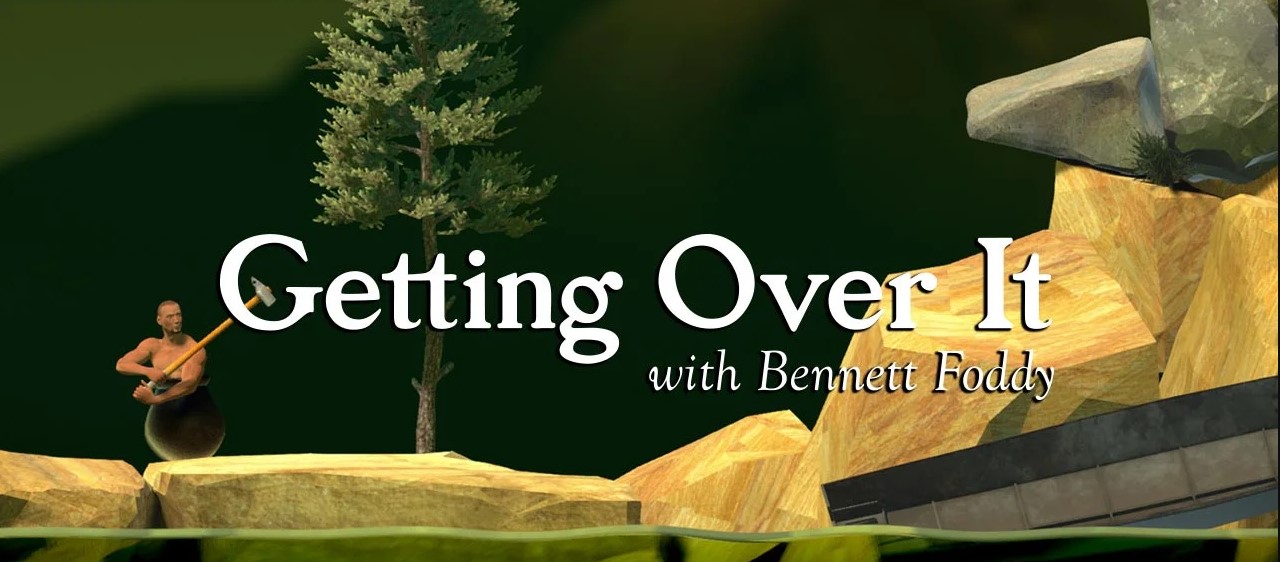
This game is a challenging physics-based platformer renowned for its frustratingly addictive gameplay, precise controls, and philosophical commentary. Developed by Bennett Foddy, the title has captivated players worldwide since its release in 2017, offering a unique test of patience, skill, and determination.
This article explores the origins, gameplay, features, and enduring appeal of Getting Over It with Bennett Foddy, as well as ways to experience this iconic game for a truly intense gaming challenge.
Set in a surreal, vertical environment, the game immerses players in a quest to climb a mountain using only a hammer and their wits. Every movement requires precision, as mistakes can result in losing significant progress, making every successful ascent incredibly rewarding.
With its minimalist graphics, rhythmic pacing, and psychological challenge, the game has become a staple of indie gaming, continuously inspiring both casual and hardcore players to test their patience and perseverance.
Development and Release of Getting Over It with Bennett Foddy
Getting Over It with Bennett Foddy was developed by independent game designer Bennett Foddy and released in 2017 for PC and later on mobile platforms. It gained immediate attention for its unique combination of extreme difficulty, physics-based controls, and philosophical voiceovers.
Bennett Foddy designed the game to challenge players’ frustration thresholds while exploring themes of perseverance, failure, and human resilience. The use of simple tools, namely a hammer for climbing, combined with unpredictable physics makes the game a uniquely punishing expegrience.
Thus, if this game kept you glued to the screen, prepare for more with Sonic Generations, another game packed with memorable gameplay and excitement.
The game’s minimalist art style, focus on gameplay mechanics, and seamless integration of motivational commentary created a cult following. Its popularity spread through streaming platforms and online communities, making it a benchmark for challenging indie games.
Storyline and Setting of Game
The narrative of Getting Over It with Bennett Foddy is minimalistic yet deeply symbolic. Players control a man stuck in a cauldron, armed only with a hammer, attempting to ascend an endless mountain. The game has no traditional story, but the ascent itself represents struggle, persistence, and personal growth.
The surreal environment is composed of scattered boulders, trees, ladders, and other objects arranged in a seemingly impossible vertical landscape. Each section is designed to test patience, precision, and problem-solving. The philosophical narration reflects on the nature of failure, persistence, and the human experience, making each climb both a physical and mental challenge.
Game Modes in Getting Over It With Bennett Foddy
This game primarily offers a single core mode that challenges players to climb the mountain from bottom to top:
- Standard Ascent Mode: The default mode tasks players with climbing the mountain from bottom to top using precise hammer movements, testing patience and dexterity.
- Optional Challenge Runs: Many players create self-imposed challenges, such as speed runs, “no-reset” attempts, or limited-movement climbs, adding replayability and competitive flair.
- Community Challenges: Online leaderboards, shared achievements, and fan-made goals encourage players to compare times, set creative rules, and participate in community-driven competitions.
- Experimental Play: Players often experiment with alternative strategies, such as unconventional hammer techniques or unconventional paths, to test mastery and create personal milestones.
Gameplay Mechanics of Getting Over It With Bennett Foddy
The gameplay revolves around physics-based control, precision timing, and problem-solving:
- Hammer Control: Players use a hammer to grip, push, and pull along surfaces to navigate the terrain. Every movement must be carefully calculated.
- Physics-Based Movement: The game’s realistic physics require understanding momentum, leverage, and timing to progress without losing altitude.
- Environmental Interaction: Objects of varying shapes and sizes create unique challenges, requiring adaptive strategies and creativity.
- Progression Management: Each ascent must be approached methodically, as mistakes can result in losing large portions of progress.
Beginner Tips and Tricks
New players can improve their climb by following these strategies:
- Start Slowly: Focus on controlled, deliberate hammer movements rather than rushing, as precision is far more important than speed.
- Learn Momentum: Pay attention to how the hammer interacts with surfaces to anticipate swings, bounces, and chain movements effectively.
Moreover, thrilled by the action and pace in Over It with Bennett Foddy? Then you’ll find Crash Bandicoot N. Sane Trilogy just as exhilarating, with similar elements that will draw you in.
- Take Breaks: Step away periodically to reduce frustration, maintain concentration, and avoid mistakes caused by fatigue.
- Focus on Small Goals: Divide the climb into manageable sections, celebrating each milestone to stay motivated and reduce stress.
Features of Getting Over It with Bennett Foddy Game
This brutally challenging climbing experience is designed to test your patience, precision, and perseverance. Moreover, every moment feels like a personal battle between frustration and determination.
1) Extreme Physics-Based Challenge
Every movement in the game is governed by realistic physics, requiring players to carefully control their hammer to climb obstacles. Unpredictable interactions with the environment keep players adjusting strategies constantly. Mastering momentum, leverage, and precise timing is essential for progression.
The difficulty is intentionally punishing, turning mistakes into learning opportunities. Each successful maneuver brings a strong sense of accomplishment and satisfaction. The challenge promotes problem-solving, patience, and adaptability. It also makes every small victory feel hard-earned and meaningful.
2) Minimalist Yet Immersive Design
The game’s simple visuals focus attention entirely on gameplay mechanics. Surreal landscapes create a unique sense of scale, challenge, and immersion. Minimalist design reduces distractions while emphasizing precision, timing, and strategy. Despite simplicity, the environment feels alive and provides context for the climb.
Players can fully concentrate on skill mastery and overcoming obstacles. The design enhances focus and encourages players to embrace the challenge. It also makes the gameplay psychologically intense and rewarding.
3) Philosophical Narration
Bennett Foddy’s voiceover delivers reflections on failure, perseverance, and the nature of challenge. Narration transforms frustration into motivation, encouraging players to continue despite setbacks. Each commentary segment adds emotional depth and thematic resonance to the gameplay.
Insights on human nature, patience, and persistence make the climb feel meaningful. Players experience a narrative that complements the mechanics, adding context to their struggle. Philosophical narration enhances engagement and provides a reflective layer. It also encourages introspection and personal growth during gameplay.
4) Community-Driven Challenges
Players create custom goals like speed runs, no-reset climbs, or creative movement challenges. This fosters a vibrant online community that shares strategies, achievements, and experiences. The social aspect enhances replayability and competition. Watching others succeed or fail amplifies appreciation for the game’s difficulty.
Custom challenges keep the game fresh and engaging for dedicated players. Community-driven content motivates repeated play and exploration. It also strengthens the sense of shared accomplishment among players.
5) Replayability and Personal Growth
Every attempt teaches patience, focus, and refined problem-solving skills. Players return repeatedly to master difficult sections, conquer setbacks, and achieve personal milestones. Each climb reinforces learning from failure and rewards persistence. The sense of accomplishment after overcoming obstacles makes the gameplay loop psychologically satisfying.
Replayability is enhanced by self-imposed goals and mastery attempts. Personal growth is integral to the experience, making every session meaningful. It also encourages players to embrace challenge and resilience as part of gameplay.
Advanced Gameplay Strategies
Experienced players can refine their performance using these techniques:
- Master Complex Maneuvers: Practice advanced swings, rotations, and hammer techniques to reach tricky ledges and bypass difficult obstacles efficiently.
- Momentum Control: Use inertia strategically to traverse gaps, climb steep surfaces, and maintain balance without losing progress.
- Visual Mapping: Memorize object placements, angles, and hazards to anticipate challenges before attempting risky or precise moves.
- Strategic Pausing: Employ calculated pauses to reset momentum, plan the next sequence, and reduce the chance of costly mistakes.
Why Getting Over It With Bennett Foddy Is So Popular
Getting Over It with Bennett Foddy has become a cult classic thanks to its unique combination of extreme difficulty, psychological engagement, and philosophical reflection. Players must navigate a seemingly impossible climb using only a hammer, relying on precision, patience, and strategy to progress.
The minimalist design focuses attention on skillful gameplay rather than flashy visuals, while the punishing mechanics create moments of both frustration and exhilaration. The game’s distinctive approach challenges players mentally and emotionally, making every small victory feel deeply rewarding.
Its viral success on streaming platforms and social media, coupled with community-driven competitions, has cemented its status as an iconic indie title. The game’s commentary on failure, perseverance, and self-reflection adds a layer of intellectual and emotional depth, transforming a challenging climb into a meaningful experience.
Whether seeking a rigorous test of skill, a mental challenge, or an exploration of persistence and personal growth, Getting Over It delivers a truly unforgettable experience that continues to resonate with players around the world.
System Requirements
To enjoy Getting Over It with Bennett Foddy smoothly on PC, your system should meet the following requirements:
- OS: Windows 7/8/10
- Processor: Intel Core i3 or equivalent
- RAM: 4 GB
- Graphics: Integrated GPU compatible
- Storage: 1 GB available space
Getting Over It with Bennett Foddy remains a defining indie title, offering a uniquely challenging and thought-provoking platforming experience. For anyone seeking a punishing yet rewarding test of skill, patience, and perseverance, this game is a must-play.


Leave a Reply